
By Melody Winderweedle • Her original post can be found here.
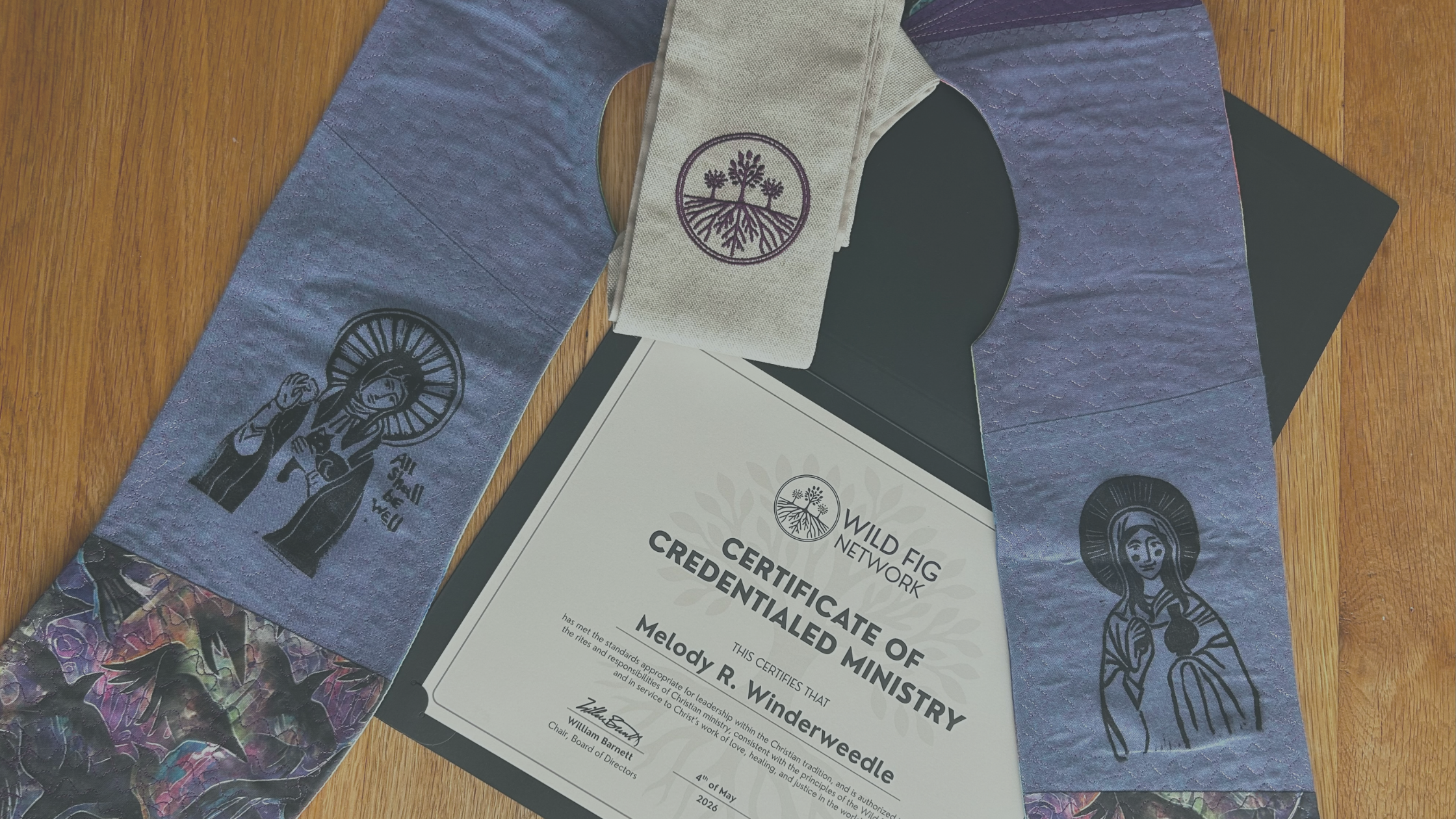
Image by Melody Winderweedle
When I was 19 years old, I applied to be Lead Camp Counselor at the summer camp where I grew up. I lived at this camp year-round. I experienced my entire adolescence there. It was the environment that raised me and formed me. I was more than qualified for the title that Summer. But my application would not be considered because I was a woman, and women can’t lead in ministry. I walked away from that place and internalized a truth…
I am not enough.
I do not belong.
Years later, I found a sense of belonging in a church that affirmed my gifting as a woman in ministry. I found my place serving as a leader in youth, children, and small group ministries. Eventually, my husband and I were asked to be a part of the Elder team. In 2013, we were called to a meeting of the elders to discuss a growing “issue;” whether or not our Queer siblings could hold leadership within our church. I remember sitting in a room with fellow straight people discussing whether or not it was appropriate for a lesbian couple who were eager to serve in the children’s ministry and be a part of an upcoming mission’s trip. Yet we sat in a circle where there were no queer voices, determining what was appropriate for our queer siblings. And all I could think about was that just a few years ago, a bunch of men sat in a room deciding what was appropriate for women in ministry. And it all felt wrong. Who were we to make that decision? And where were the voices of our Queer siblings who could advocate for themselves? The final vote was to not allow that couple to serve, so they left our church. I was angry and grieved the decision. Those women perhaps internalized a truth…
They are not enough.
They do not belong.
After this, I began to question our church polity. Was it wise to have all the decisions made from a few people at the top of the hierarchy? Where were the voices of the congregants supposed to be heard? Who was advocating for them? Is this the embodiment of Chirst’s Body? In the midst of these questions, the Lead Pastor felt called to plant a church elsewhere. To my surprise, my husband and I became the co-lead pastors of the congregation. My sense of belonging increased until I realized that not everyone in our church was comfortable with a woman pastor. And I found myself under a lot of criticism even from the people who supported women in ministry. My voice, my theology, my approach to scripture, and my preaching on issues of Social Justice made some nervous. I was told to quiet down, to not be so political, and just stick to the gospel. Eventually, some folks left and others split to plant their own church. They claimed that I was too dangerous. And it reaffirmed a “truth”…
I am not enough.
I do not belong.
In the midst of Covid, our church felt the freedom to clarify our identity. And a few things became clear: we are a House of Healing 1 and we are a people who fully affirm our Queer siblings. The latter point was in direct opposition to our denomination. So I went to the National Conference to talk to our “upline.” 2 My plan was to ask that our congregation could be a sort of test case for the denomination. We are a denomination that valued the movement of the Holy Spirit. So what if our church could be a test case for the Holy Spirit’s movement toward full inclusion of our Queer siblings. My request was denied, and I was told that the Holy Spirit was not moving in that direction. We either had to remain “welcoming but not affirming” or drop our denominational affiliation. Having found so much freedom and empowerment in this space, the rejection was quite painful. And it reaffirmed the truth…
We are not enough.
We do not belong.
After a year of grieving our dissassociation, something new started to stir. I was reminded of the questions of a decade ago about the nature of church structures. I started wondering if maybe these hierarchies that we have created are not inevitable. We made them, afterall, can’t we unmake them? So, alongside my church community, we started imagining a church structure outside of rigid hierarchies where the people at the top decide what is best for the rest of us. We started thinking in circles instead of triangles and we created different rhythms for our Sunday gatherings. It didn’t always have to be about a sermon where one person talked and everyone else passively listened. Instead, we created space for group contemplative practices, we ate brunch together and wrestled with scripture, and we started inviting responses when a sermon was given. I shared this new vision with a group of colleagues. And their response was cautiously optimistic.
The old truth became a question…
Is this enough?
Can we belong?
Then, over the magic of the internet, I discovered another minister who was asking similar questions about the state of the American Church. I was invited by Eugene Kim into a group of church leaders who were also doing church differently. In that group, I discovered the gestation of The Wild Fig Network and I was invited into the Design team. I went to a retreat in Fall of 2025, and I was nervous. How would I be received? Where would I fit into this space? Could I bring my whole self? I was so used to being a disruptor, and I was exhausted. But what I experienced was a full embrace. I met with a group of people who had experienced their own points of rejection and betrayal from the church hierarchies. I sensed kinship and a spark of hope that I might just belong. And I realized that the “truth” I had internalized was actually a lie…
I AM enough.
Could I belong?
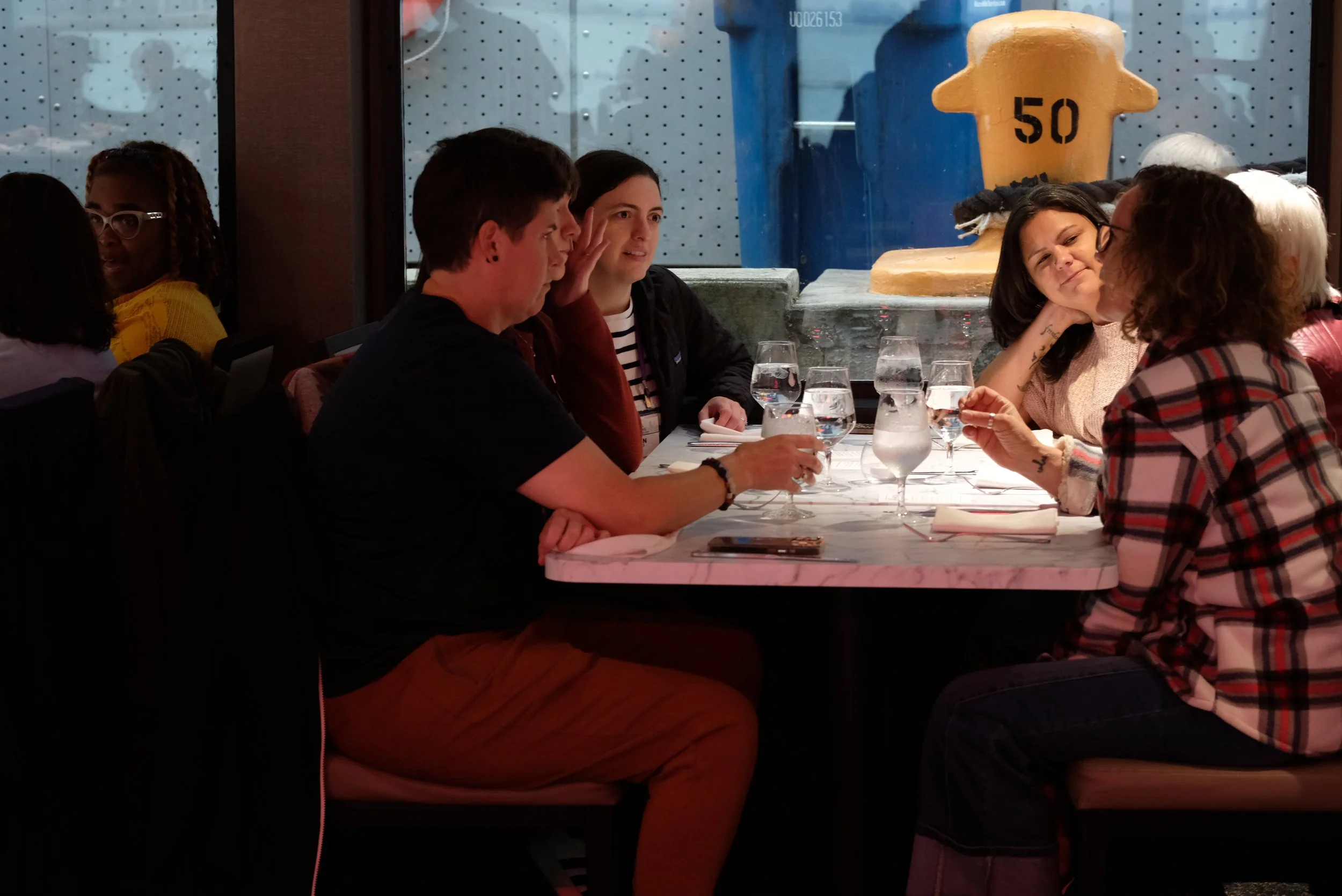
Melody leans into conversation on the dinner cruise. Photo by Weylin Lee.
Two weeks ago, the Wild Fig Network had their inaugural gathering. Over the course of our time together, we reflected on what the Wild Fig is and could be. One friend, Joshua Crozier, commented that the Wild Fig meant “belonging for the unbelonging.” I felt that statement so deeply! The folks who were gathered there had all experienced the pain of unbelonging. And yet, as we listened and held each others’ stories, I witnessed that same glimmer of hope I had a year ago. Maybe we could belong together in all of our blessed unbelonging.
At the end of the gathering, we honored the birth of this network with a ceremony that named who we intended to be as a community. There was no one person or group who decided who was in or out. Instead, everyone was invited to make the commitment to belong together. The constant refrain throughout was clear, and it is The Truth that I am holding tenderly as I reflect back on a week so full of goodness and life…
We are one body.
We belong to one another.
So much of my life in ministry was met with resistance in a system that was, at its core, not made for me. And when I asked questions of the system, I was told to contort myself into the space I was given or to leave. But all along, I was yearning for a place that made room for all of me. That is what the Wild Fig is birthing. A system, a network, that makes space for everyone to grow and thrive and belong to each other. Where mutual flourishing is the goal, and everyone is seen and valued.
We are enough.
We are one Body.
We belong to one another.
1 Yes, this is a reference to Return of the King by J.R.R. Tolkein
2 A reference to my last post found here.
